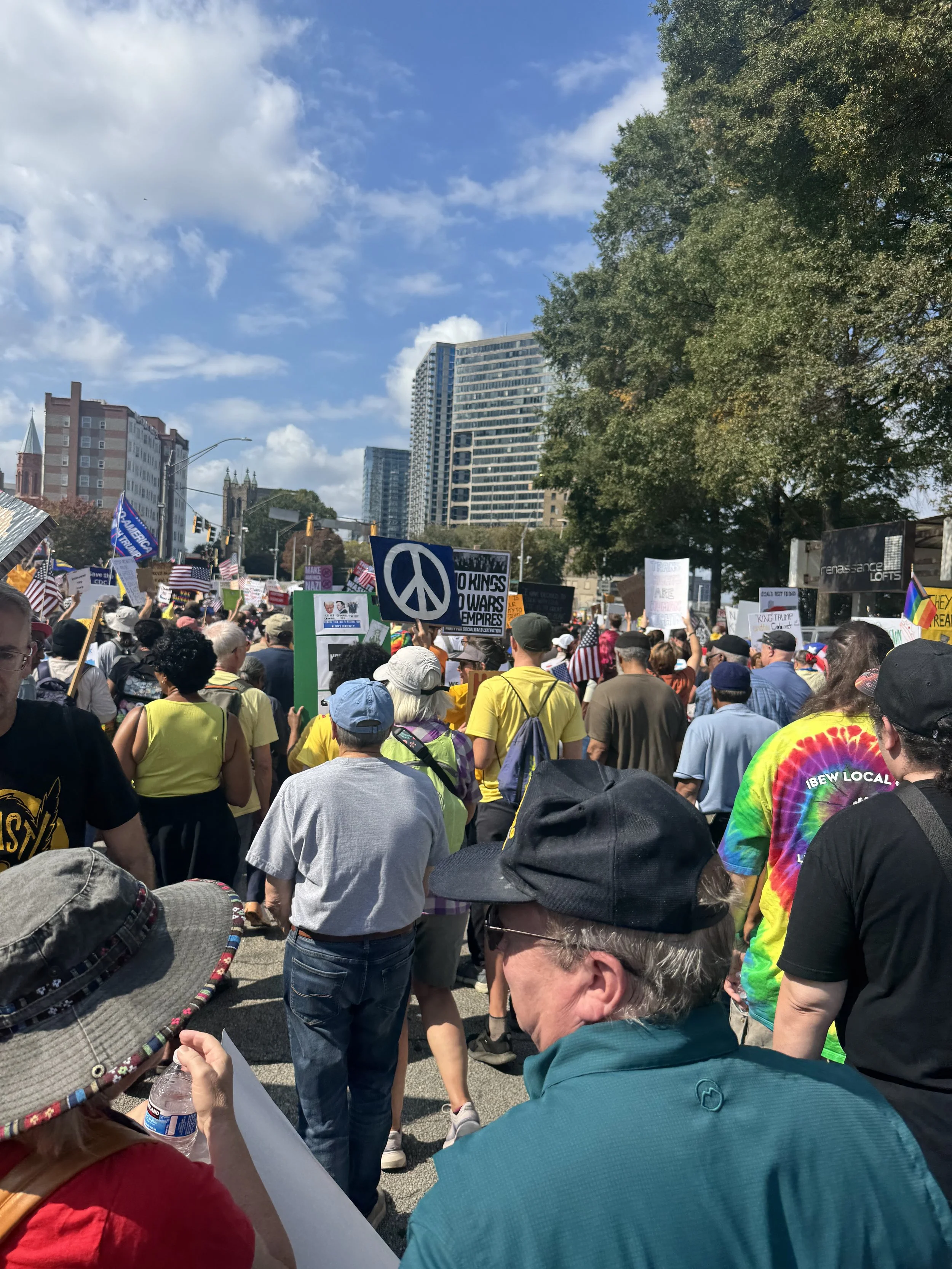
Working Together on Social Justice
Faith in the Public Square Can Help:
Congregations and denominations understand their history when it comes to social justice and set up or strengthen a structure for social justice ministry which is the best fit for them.
Congregations and denominations build relationships with both members and interfaith and secular leaders in their communities who are already working on social justice.
Conduct seminars for congregation and denominational social justice committees and commissions to understand the ecumenical, interfaith, secular and union social justice advocacy landscape and make good choices on where to focus energy and empower others to live into their faith.
Contract with congregations, denominations and secular organizations to do a better job of working together to do social justice.
Guide unions and congregations and denominations on how they can support each other to work on workers rights and collaborate on shared policy priorities.
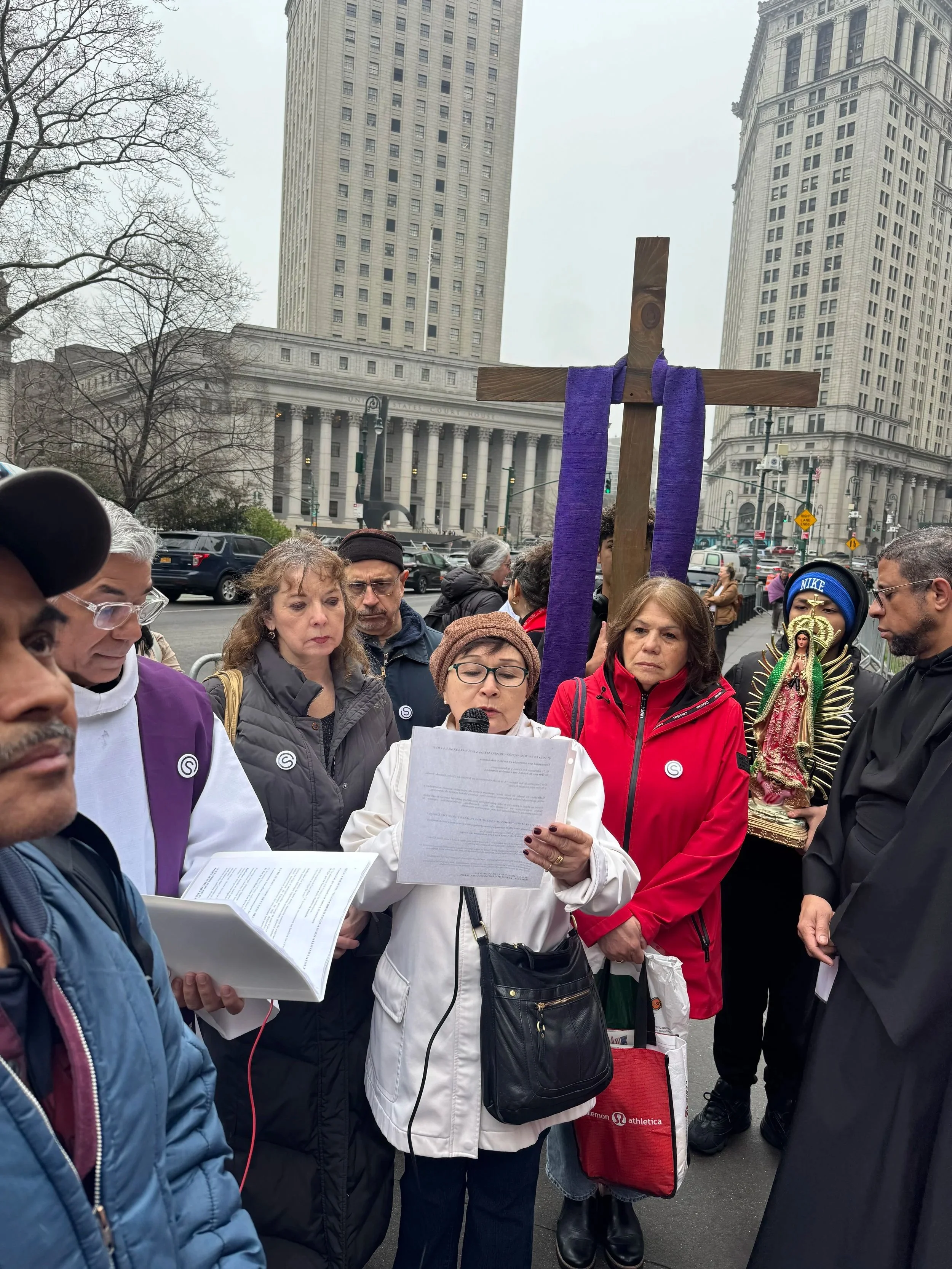
Unions, Secular Groups and Faith Communities Collaborating Together on Social Justice
Some Pointers
Every denomination and congregation have a history of working on social justice and name that commitment in their founding documents and mission statements. So often, however, that history is ignored in current practice of ministry. Understand your strengths and reclaim your history.
Everything you say or do or neglect to say or do is a political choice. Be honest with your congregation. Do not neglect to use scripture to address the issues of our time from the pulpit and in other settings.
Integrity and justice are central to your work and they are fundamentally connected.
How you treat your staff and volunteers on the inside needs to match with the justice you seek to do in society as a whole. A lack of congruence will render you ineffective, un-credible and severely limit your ability to raise funds and attract new members. Remember that your integrity as an organization is your greatest asset and will make you attractive to more people.
Pastors do not do social justice work alone. They teach others to live into their baptisms to do social justice work. Pastors do this work as part of their calling but they do it in collaboration with others. Don’t be a lone ranger!
Do build connections with faith communities of different religions, races, and theological traditions. Nurturing relationships with people of other faiths is central to our Christian identity
Both pastors and laity show up in your community to build relationships with secular people and people from different faiths or denominations. Attend and speak at:
Rallies, Marches, and Town Halls
Town meetings, zoning boards, city council meetings
Union picket lines
Legislative visits and hearing
Remember faith communities historically and currently centers for community conversations and political discourse
Invite your legislator to attend church and then speak afterword in a facilitated conversation
Hold a candidate forum and do it in conjunction with other faith communities. Show up for each other’s forums. Ensure all candidates are invited.
Offer your space for public gatherings and conversation
Hold forums with community leaders and politicians
Attend events and forums sponsored by your local and state council of churches, denominations, or advocacy groups
Fellowship meals and gatherings of all types offer good opportunities to build community and cultivate relationships. Offer food appreciated by different ethnicities in your congregation and community.
What does a Social Justice Committee or Commission Do?
Research and promote opportunities for people in your congregation or in the public to get involved and exercise their social justice muscles
Understand different opportunities to do social justice work and help a congregation make wise choices of where to focus their efforts.
Highlight events and forum actions in your community and encourage people to attend
Promote opportunities in your church for parishioners to build relationships with each other and secular and religious people in your community
Urge parishioners to sign up for mailing lists for local and state councils of churches, denominations, National Council of Churches and World Council of Churches. Also sign up for the newsletters of all your elected officials. Also subscribe to list serves of groups working on social justice issues you care about.
Pick one or two issues the committee itself organizes around and invite congregants to join you. Don’t, however, discourage congregants from working on other issues which are important to them.
As Archbishop Oscar Romero said, “We cannot do everything, and there is a sense of liberation in realizing that. This enables us to do something, and to do it very well. It may be incomplete, but it is a beginning, a step along the way, an opportunity for the Lord's grace to enter and do the rest.”
Social Justice and Pastoral Care
Good social justice work is intimately tied to good pastoral care. Social justice springs from understanding the personal challenges of parishioners in your church and people in your community. Get to know the people in your congregation and learn about their struggles. Be curious about the stories of others. Start with people’s struggles and needs and help them address systemic injustice that affects them. Do not write off people for their political views but seek to understand their deeper concerns.
Here are some sample questions you can ask
How many people in your congregation are spending more than 30% of their income on housing? Are you doing what you can to resist Not-in-My Backyard movements which aim to block the construction of affordable housing?
Has anyone in church been incarcerated or have a loved one who is currently incarcerated? What does welcome to them look like and what policies and laws can you change to improve their lives?
Who is in a nursing home? How much are they paying? How are the workers treated there? How can you advocate for state and national policies which would ease the burden?
How are people suffering personally or economically because of regressive immigration policies? People fear that they will be picked up by ICE. Business renewal or farming aborted by fear of ICE. What can you do to pass laws which are more hospitable to immigrants?
Does anyone in your congregation suffer health or economic challenges because of bad air, water or ground pollution?
Are there members in your congregation who are in a union or want to be in a union? What are the priorities of those unions and where do they gather?
Resources:
New Mexico Conference Takes a Deep Dive into the Revised United Methodist Church Social Principles, July 6, 2026. The Reverend Neal Christie, Co-Principal of Faith Beyond Religious Nationalism, led the process to rewrite the United Methodist Church Social Principles, now conducts workshops across the country to teach United Methodist Churches the social principles. Most recently he did nine workshops in the New Mexico Conference.
To begin imagining how your church can support unions, listen to this segment on the Brian Lehrer show: UnitingAmazon Workers with Derrick Palmer, cofounder of the Amazon Labor Union and the author of Handbook for the Revolution: Building a More Perfect Union for the Twenty-First Century (Auwa Books, 2026). Palmer tells the story of organizing the first successful labor union for Amazon workers at the JFK8 Warehouse on Staten Island and offers advice for other workers seeking to organize.
Seeds of Justice, Orbis Books, by Alex Tindal Wiesendanger
The Church and Social Justice Peter Cook, Brian Kramer and Alex Tindal Wiesendanger, Bar Crawl Radio, June 19, 2020
Guidance for churches and clergy participating in the electoral process - ELCA Resources, April 17, 2026
Doing Social Justice with Politically Diverse Communities: Theological and Pastoral Perspectives. Peter Cook, New York State Council of Churches, January, 2018
Bridging the Rural Urban Divide, Peter Cook, Address to Town and Country Committee, New York Conference, United Methodist Church, June 8, 2017.
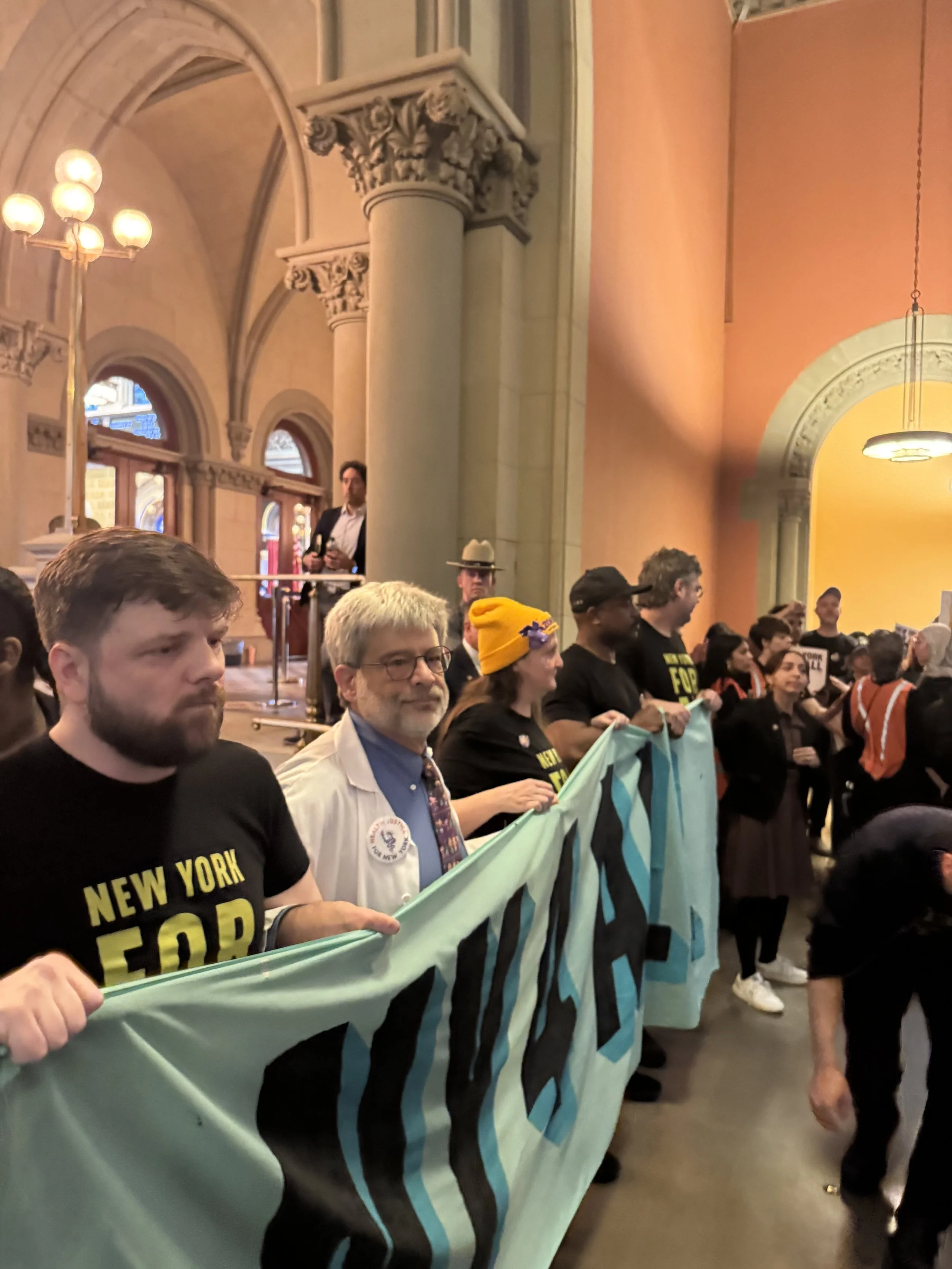
Our Commitment is to Help People Live Out Their Faith in the Public Square
Faith in the Public Square believes that religious, secular institutions and unions need to work together to build coalitions and promote public policies to support:
Workers rights and union organizing
The preservation and construction of affordable housing in rural, suburban and urban settings
Strengthen the social safety net particularly health care, childcare, housing, food assistance, and Social Security.
Reverse wealth inequality and promote progressive tax action and tested approaches to economic development
Boldly welcome immigrants
Offer hope and restoration to justice system involved individuals
Protect the environment and counter climate change